
As supply chain disruptions become more severe and frequent due to shocks such as climate change and geopolitical tensions, local food systems and urban agriculture planning have become increasingly important tasks for municipalities. However, agri-food system development, policy, and planning have historically been outside the scope of municipal governance, as food is typically produced in rural areas and food systems primarily rely on long, transboundary supply chains. The Transdisciplinary Research on Integrated Approaches to Sustainability (TRIAS) lab conducts research on urban agriculture planning to improve knowledge on how municipalities can effective engage in local food system planning and development. Such research includes the following projects:
Urban Agriculture on Vancouver Island Co-Designing Future Food Systems Urban Agriculture Education
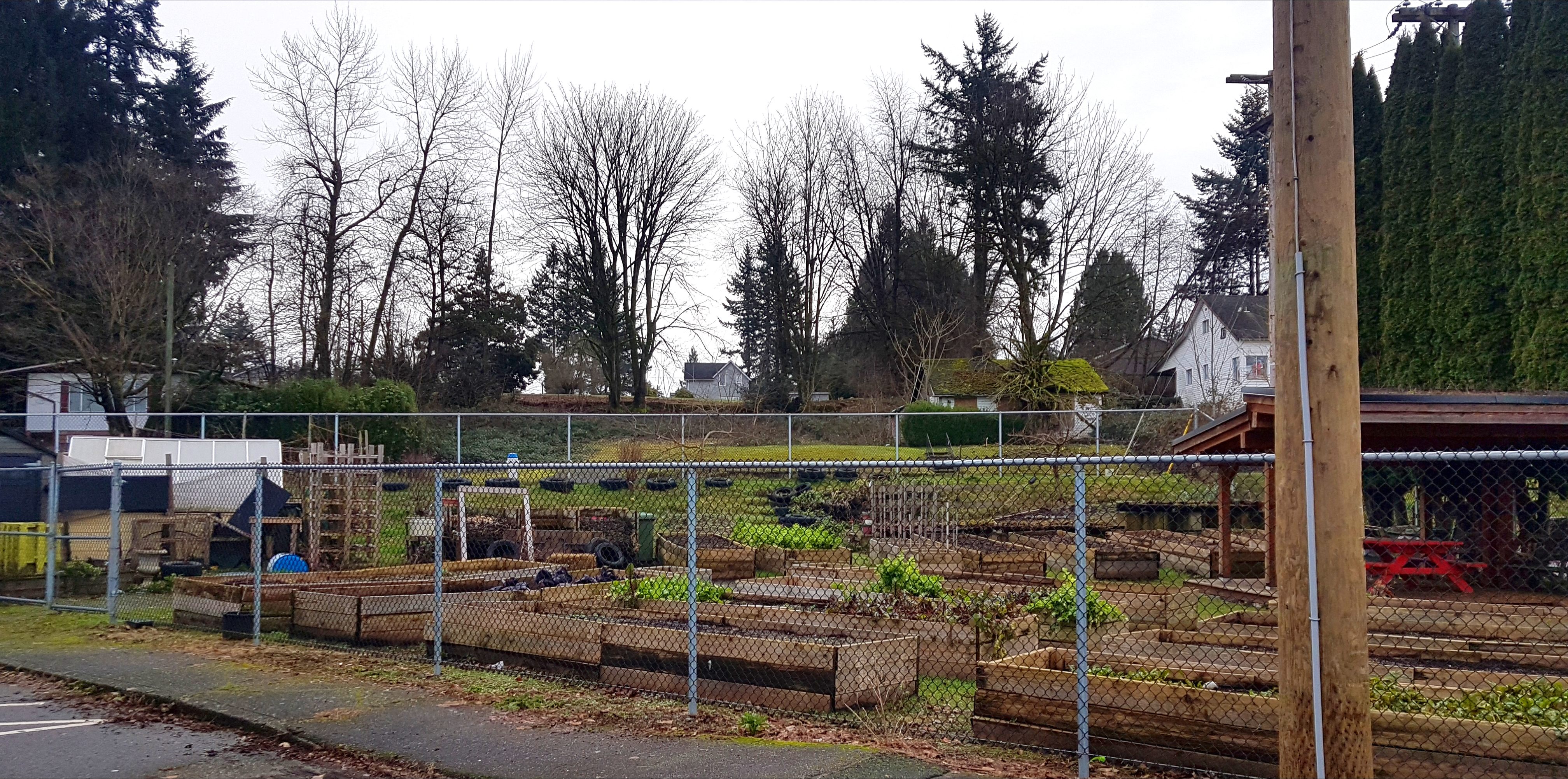
The Urban Agriculture in Municipalities on Vancouver Island project examines opportunities and challenges surrounding urban agriculture in communities on Vancouver Island, British Columbia, namely Langford and Tofino. The research applies qualitative research methods to interview transcripts and planning documents. The findings reveal ways of enhancing local policies for better supporting food production in urban areas. Click the button below to download a report on the study.
Download Urban Agriculture on Vancouver Island Research Report
The Co-Designing Future Food Systems research project explores future scenarios and tools for integrated local food system planning. Working closely with community partners and using a climate-biodiversity-health-justice nexus framework, the research maps, imagines, and models options for developing local food systems and urban agriculture. The research explores the use of both conventional urban agriculture strategies (such as urban farms) and cutting-edge food production technologies (such as vertical and cellular agriculture), modelling their climate, biodiversity, health, and equity-related outcomes. The project involves a literature review study that identified how agri-food systems planning and policy engage with local objectives and co-benefits related to climate change adaptation and mitigation, biodiversity conservation, community health, and social justice. The outcomes of the study include an indicator framework that can be applied to local food system planning and policy. Click the button below to access the study and learn more about the indicator framework.
Local Food Systems Indicator Framework
The Urban Agriculture Planning Education project involves a collaboration with the Food and Agriculture Institute at the University of the Fraser Valley, and it examines needs, tools, and techniques for developing effective educational programs to train practitioners in the emerging field of local food system and urban agriculture planning. Two reports have been produced through the project. The first report, Urban agriculture planning education programs: Needs and opportunities, summarizes industry engagement activities informing the design and development of an educational program on urban agriculture planning. The second report, Planning for Urban Agriculture Education: Workshop Report, presents an analysis of the outcomes from two pilot workshops on pedagogical approaches to food system planning education. Click the buttons below to download the reports.
Needs and Opportunities Workshop Report
Below is a visualization tool for supporting local food systems and urban agriculture planning and education. Using downtown Abbotsford (BC, Canada) as a case study site, the tool allows learners to place different food assets to create a local food systems development scenario, explore their scenario from a first-person perspective, and reflect on the advantages and disadvantages of their scenario. After the visualization has loaded in the window below, click on the full-screen expansion button in the bottom-right corner (i.e., the blue button with two arrows) to start using the tool. Use the buttons below to download the instructions for the visualization tool and a desktop version of the tool (after downloading the desktop version, unzip the package and open the "UrbanAgPlanEdu" application).
Download the Visualization Instructions Download the Desktop Application
The Local Food System Scenario Assessment Tool consists of an Excel-based semi-quantitative indicator framework for evaluating potential sustainability outcomes associated with local food asset development scenarios. Users enter the number of units for the local food assets they wish to include in their local food system development scenario. The tool then calculates potential sustainability outcomes based on predefined indicators, scoring criteria, and weighting factors. Scoring values and weights may be adjusted according to user criteria, planning priorities, and/or expert judgment. The tool is integrated into the desktop version of the downtown Abbotsford visualization tool , and it can be downloaded as a standalone tool using the buttons below.
Download the Scenario Tool Instructions Download the Scenario Tool
We are grateful to Canada’s Social Sciences and Humanities Research Council (SSHRC) for providing funding provided to support to the Co-Designing Future Food Systems through their Postdoctoral Fellowships program. We are also grateful to B.C. Centre for Agritech Innovation and the Royal Bank of Canada for providing funding provided to support to the Urban Agriculture Planning Education project.